
Internet penetration in Africa, with over 500 million users, has been transformative for organizations, especially as Artificial Intelligence (AI) assistants drive them to integrate modern technologies and products into their existing systems to maintain a competitive edge.
However, rapid integration and development in Africa are driving growing demand to implement adequate security measures for these advanced applications. Traditional security methods struggle to keep pace with sophisticated cyberattacks, leaving most organizations vulnerable. According to Interpol, the continent reportedly lost over 3 billion USD to cybercrime in 2025. The primary sectors on the continent affected by severe cyberattacks are finance, healthcare, energy, and government, with an average of 3,153 attacks per week.

In essence, organizations in Africa are struggling to protect themselves.
Cyber resilience in Africa in 2026 will require executive-level governance, technical hardening, and AI risk oversight. Firms that invest early will define the next decade of digital trust in Africa.
For example, Kaspersky Security Network reported that Africa ranks 3rd globally in the share of users attacked by crypto-ransomware. Last year alone, IT-IQ Botswana, an IT services and solutions firm in Africa, was affected by a Lockbit 4.0 ransomware. Similar incidents have also been reported by South Africa's Government Employees Pension Fund (GEPF) and in West Africa. A recent report also highlights Nigeria's significant ransomware and cloud security breach losses, totaling nearly $500 million.
What should African firms focus on in 2026 to adapt and defend against anticipated attacks? What are the things your organization needs to know and do differently?
Cyberattacks on African Financial Institutions Are Here to Stay
Currently, Africa has the highest global rate of expired security certificates (38.69%), while Northern Africa has the highest share of platforms relying on outdated, insecure encryption (14.3%).
This technical debt creates a dangerous false sense of security, especially for financial institutions. While modern browsers that integrate payment systems warn users when a certificate is expired or fraudulent, they often do not flag weak or obsolete underlying encryption methods. It is the digital equivalent of having a locked door, without realizing the lock itself is made of paper.
In 2026, addressing this is no longer just a compliance exercise; it is a business continuity imperative. Technical teams must implement automated certificate management to eliminate expiration gaps, thereby enforcing strict cryptographic policies that actively phase out weak encryption protocols and possible financial fraud. Organizations unsure of their current exposure should consider a professional vulnerability management assessment to identify and close these gaps before they are exploited.
Ransomware Attacks in Africa: Why Executives Must Act Now

Ransomware-as-a-Service (RaaS) platforms and exploits are being offered as a franchise model, enabling non-programmers to become active attackers and participate in the ransomware economy. RaaS democratises ransomware attacks, giving ordinary people an easier way into the criminal market (including Denial-of-Service attacks and wallet-drainer-as-a-service), while reducing the risk of exposure for the top of the value chain. RaaS attacks are emerging as one of the most serious categories of cyber threats, targeting financial institutions, infrastructure, and manufacturing facilities across the continent. Major threat actors active in the region include LockBit, ALPHV/BlackCat, BianLian, Cl0p, and Conti.
Current ransomware attack tactics are successful via insider threats. As reported by the FBI, ransomware groups have moved beyond "stolen passwords or misconfigured service accounts" as an attack surface to exploiting gig work platforms to carry out attacks on their behalf when remote tools such as Zoho Assist, Syncro, AnyDesk, Splashtop, or Atera fail.
Strategic Mitigation: Executive leadership must ensure employee awareness training and security awareness programs address the growing vulnerability of external recruitment attempts and insider-facilitated attacks. Furthermore, IT leaders must prioritize frequent, immutable backups and enforce comprehensive Multi-Factor Authentication (MFA) across all file-sharing platforms.
Governing AI Risk in Africa: What Every Executive Needs to Know
AI is highly productive in the hands of legitimate and malicious users. These intelligent models can innovate, automate, and destroy. McKinsey's 2025 reports indicate that AI agents are set to unlock $61 billion to $103 billion in annual economic value across Africa, driven by rapid adoption in fintech, telecom, and retail. For a continent with over 2,000 indigenous languages, these AI agents break barriers and address critical limitations of doing business in Africa, yet 60% of African companies believe they experienced an AI-powered cyberattack in 2025.
While Large Language Models (LLMs) that provide functionality for AI agents promise unprecedented efficiency, deploying these agents blindly introduces severe corporate risks.
Vulnerabilities in AI Agents:
Attacks on AI agents built on Large Language Models (LLMs) can be categorized into:
direct and indirect prompt injection attacks,
jailbreak attacks, and
hallucination attacks.
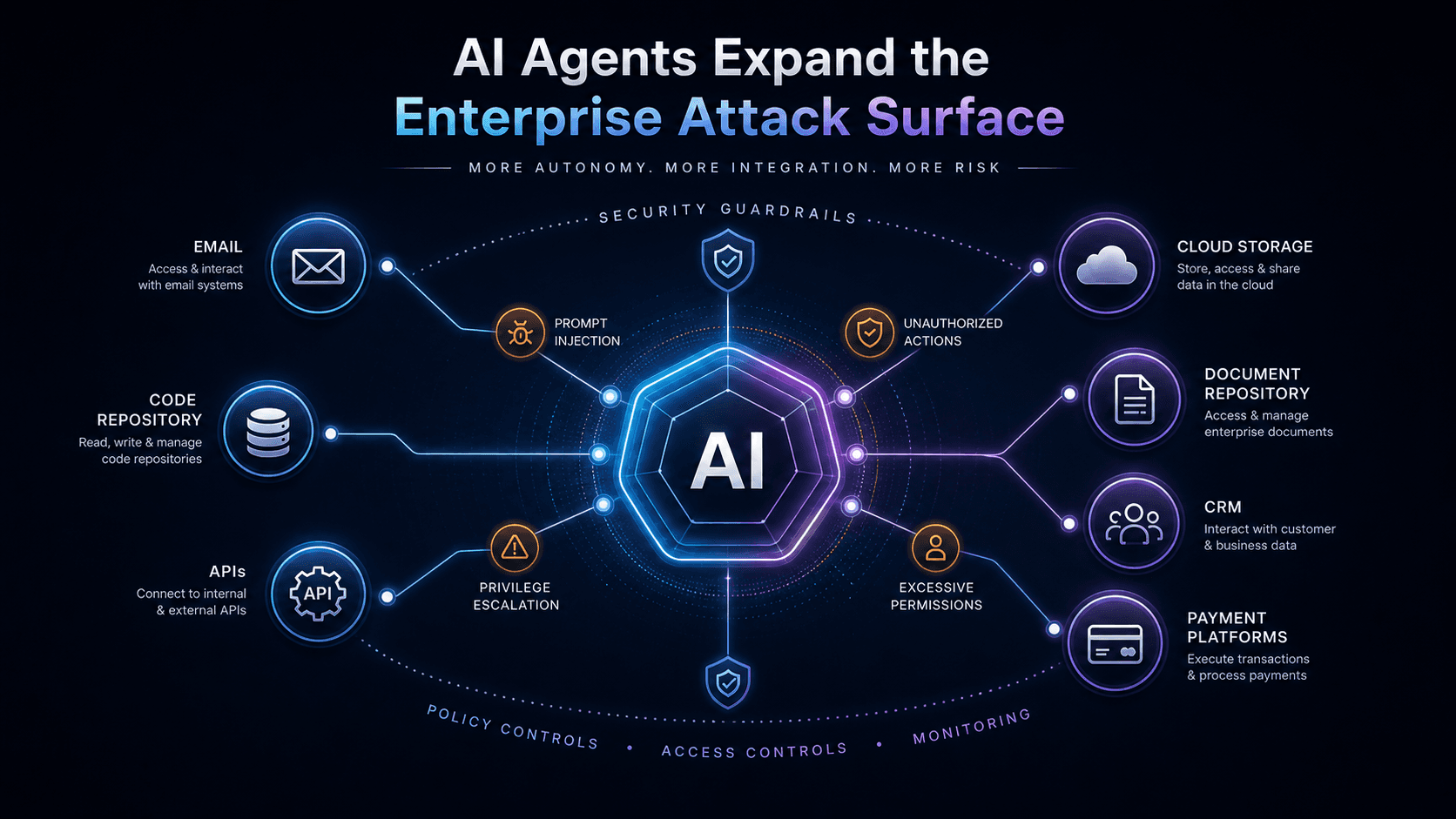
Our focus will be on prompt injection attacks, which will be the most severe threat businesses using AI agents in Africa will face in 2026.
How does an injection attack work?
A bad actor can exploit the Model Context Protocol (MCP) vulnerability, which provides AI agents with a consistent way to connect to external tools and services, to steal information or carry out malicious actions. For instance, an African retail business may be a victim of this attack if the attacker exploits the MCP server integrated with AI agents to steal, delete documents, misconfigure code repositories and APIs, or access financial and cloud data.
The cost of neglecting this vulnerability is high, as it ranks #1 on the Open Web Application Security Project (OWASP) and has drawn attention from African regulators such as Nigeria's National Information Technology Development Agency (NITDA), which issued an urgent advisory on security weaknesses in these LLMs.
Furthermore, in 2026, we are likely to see the blind integration of self-governing AI agents in Africa, such as Moltbook, which launched on Jan 27 as a "Facebook for AI Agents." The idea was autonomous interaction. However, the reality of this "AI-agents social network" is a cybersecurity nightmare. We are witnessing a significant increase in autonomous agents (such as Clawdbot) generating low-quality "slop," bypassing safety filters, and mocking their creators.
The sarcasm and the inanimate biases of these self-governing AI agents are not the only problem. The blind access to personal data is. A VC at Array VC, although not on the continent, recently disclosed via X that their Clawdbot server was hit with 7,922 brute-force attempts immediately after going live. Hundreds of other instances were found leaking private information to the public web.
The lesson for African executive leadership is direct: deploying agentic tools without enforced security configurations and policies does not just introduce risk — it actively expands your attack surface. Boards and executive teams need cyber-resilience frameworks aligned with ever-changing regulatory and operational realities across the continent. Organizations that treat AI governance as a strategic priority, not a technical afterthought, will outperform their peers in resilience. This is where partnering with an experienced vCISO becomes critical.
From ChatGPT to Attack-GPT: AI-Generated Cyberattacks Targeting Africa
The new face of cyberattacks, such as social engineering by malicious AI agents, is expected to be highly compelling, convincing, and successful. Attackers are leveraging AI for Deepfake-as-a-Service, voice cloning, and hyper-personalized phishing. Nigeria's Securities and Exchange Commission recently raised alarms about AI-generated investment scams, underscoring that these tools are already targeting African businesses and consumers. Defending against AI-powered social engineering requires moving beyond basic user awareness and establishing zero-trust validation processes.
Executive Defense Strategies for African Organizations in 2026
Isolate AI Operations: Treat AI agents as untrusted third parties. Do not grant them unmonitored access to corporate emails, PII, or banking infrastructure. AI systems require their own isolated permissions and distinct authorization policies.
Contextual Authentication: Implement AI-driven MFA that leverages behavioral and contextual factors (geolocation, access timing, device posture) to validate requests. A login from an unexpected time zone should immediately trigger a block, regardless of credential accuracy.
Deploy AI Guardrails: Rather than relying on human detection, organizations should implement automated, systemic guardrails. For instance, security teams can integrate specific behavioral logic and identity-verification protocols directly into workplace applications to automatically analyze and flag deepfakes or cloned voice prompts before they reach the end user.
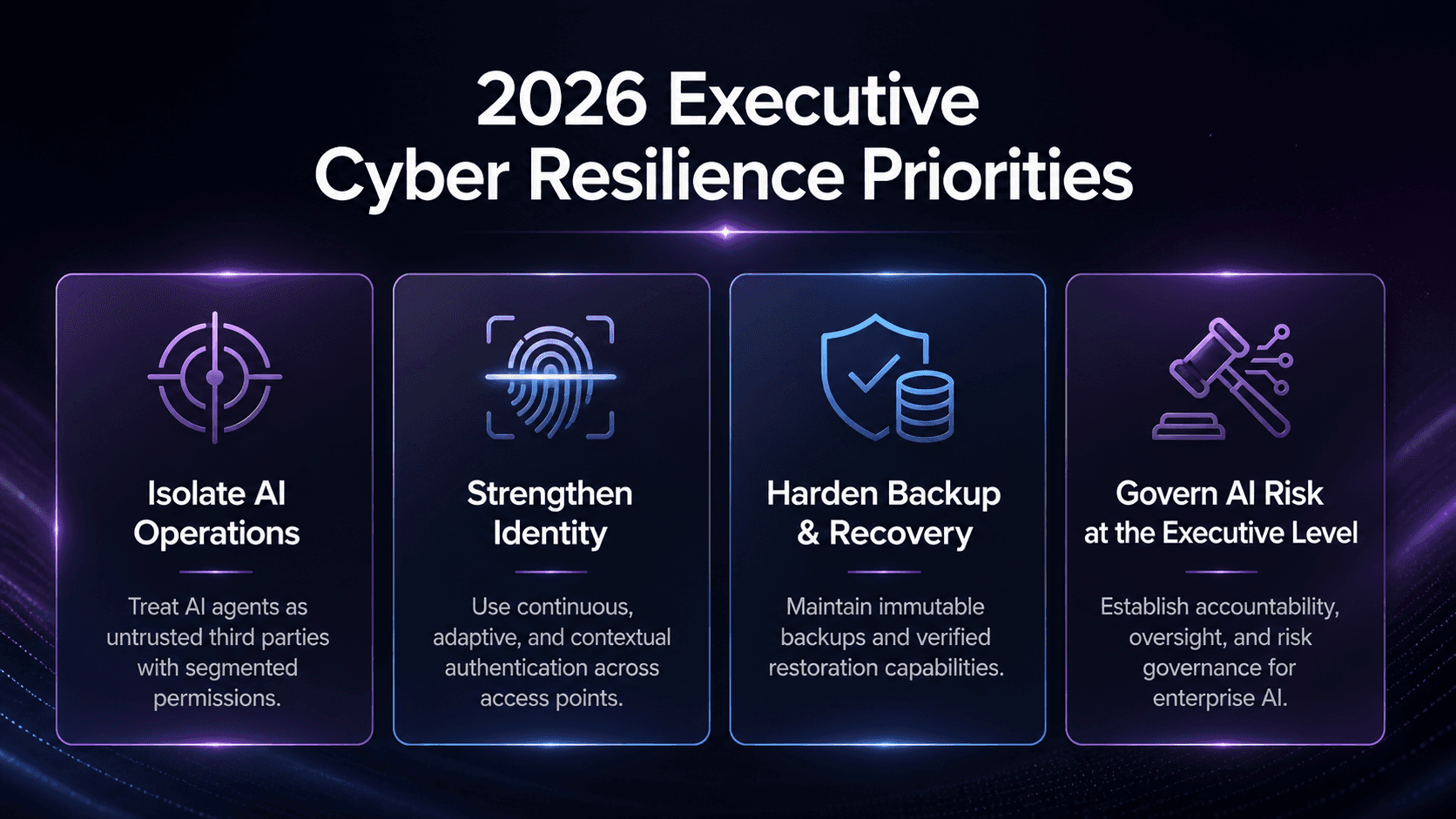
For each identified threat, proactive governance is the ultimate containment strategy. If your organization is navigating AI regulatory compliance, penetration testing, vulnerability management, or audit readiness in 2026, Idero offers a free AI Risk Assessment to help you identify your most critical exposure points before attackers do. Book yours here.